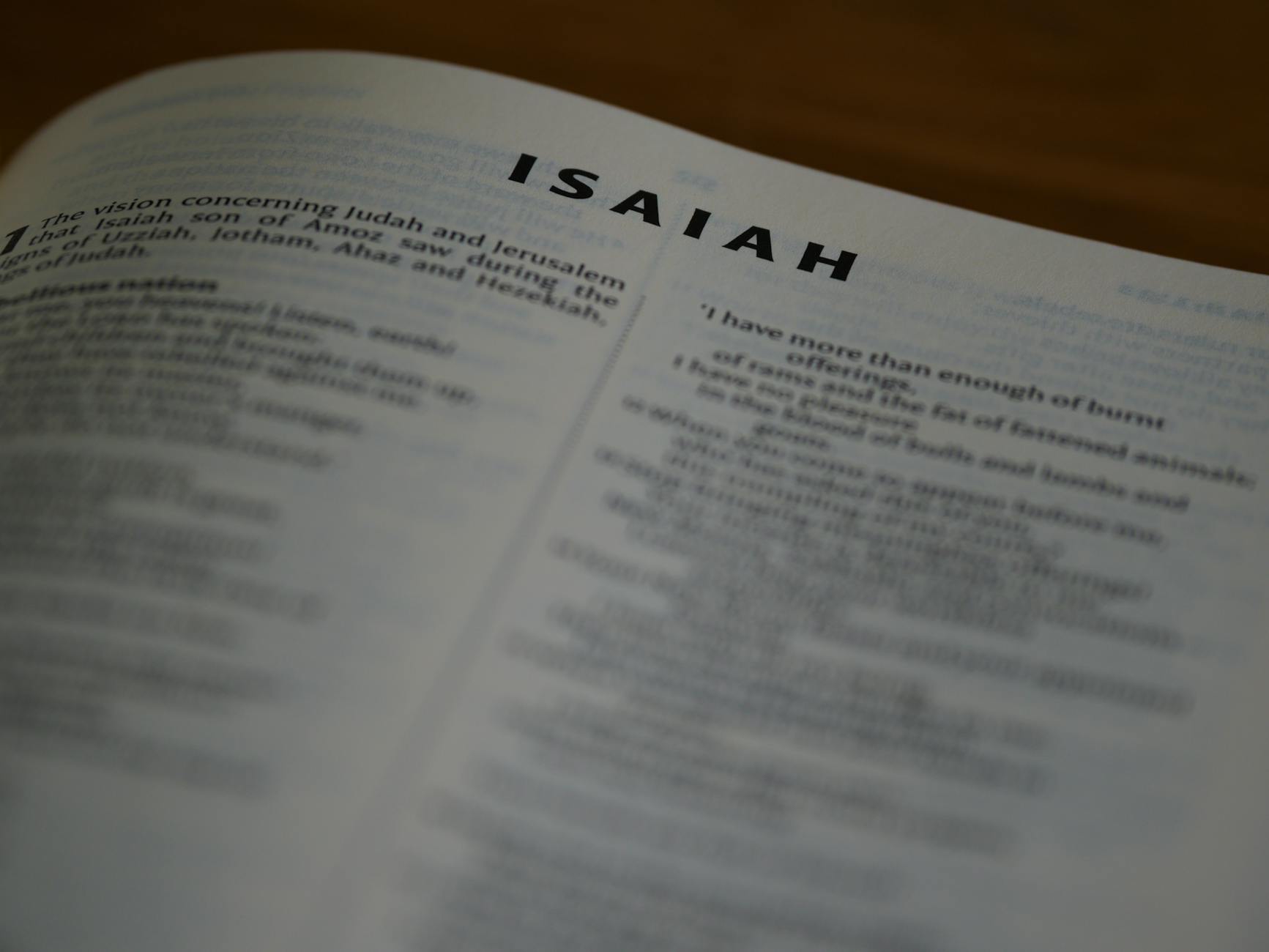
In preparation for my sermon on Isaiah 7 (which I don’t mean to suggest is an imminent occurrence), I found it interesting that it seemed common for my resources to suggest that the only thing going on in Isaiah 7:14 is a non-specified conception by an “alma” or “young woman,” and that this in the immediate context has nothing to do with Jesus.
I have no doubt that there are many who would suggest that the reference to this by Matthew in his gospel is a case of non-literal hermeneutics, and they conclude that that is why we are able to be subjective in our hermeneutics as well. Of course, perhaps a Reformed hermeneutic would suggest that Matthew 1 is a case of the New Testament giving a fuller sense that was not as apparent to the original audience as we might like to think.
I wish that I had the time to research, as much as I would like, to find out how all the different hermeneutical systems approach this text. I have dreams of one day being able to do that. But I see a common thread in assuming that the reference in Matthew to Isaiah as being “fulfilled” in Christ, cannot be literal. Some who espouse the Grammatical-Historical-Literal Hermeneutic have suggested that we stop using “literal” and substitute “literary,” and I suppose that the idea behind this is related to distancing us from misconceptions of our time. Basically, the Greek word behind the statement that the “virgin birth” of Isaiah 7 is fulfilled in Christ can be translated to mean a much wider range that simply as a direct fulfillment of specific prophecy.
On the other hand, the Jewish scribes who translated the Hebrew Old Testament in to the Greek LXX, chose to translate “alma” in to “parthenos.” Have you heard of the “Parthenon” in Athens? It was dedicated to the virgin goddess, Athena. That is the Greek word for “virgin.” For some reason, Greek-speaking Jewish scribes before the time of Christ chose to translate “alma” in to “virgin.” These were Jews before the time of Christ who predated Him by as much as approximately 300 years.
The issues are vast and complex. This is what yours truly really would really enjoy being able to know more about. But I leave you here because that is where I am at. There is much to learn, and of the making of books there is no end.




Leave a Reply