
The Pharisees were really more of a political party than they were a separate sect. However, they appealed to very religious aspects of life and the theology of the people in that they emphasized that the people remain Jewish in the midst of the secular culture of that day. They developed elaborate rules and laws for the Jews to remain ritually pure, but they also thought about the latest theological challenges of the day based on the implications from Old Testament law and tradition. Jesus engaged them on these same topics and often wound up reversing these doctrines on their own heads. He did not shy away from a debate, and the Pharisees were right in the fight with Jesus competing for the attention of the people.
The Pharisees according to Josephus but prior to Christ
It could be that the Pharisees emerged out of the Hasidim during the Maccabean revolt in the third or second century BC. The Hasidim were a group of Jews or a movement of Jews that were opposed to the Hellenization of the Jewish culture and people. According to Ferguson, a person had the choice of separating completely and joining the Essenes in the wilderness to live an ascetic life, or one could join the Pharisees and try to influence the people on the local level in an effort to keep the populace pure in the midst of foreign rule.
The first historical mention of the Pharisees comes to the reader in the Gospels of the New Testament. However Josephus, writing later, makes mention of the Pharisees in action as far back as the time of John Hyrcanus after he had made a truce with Antiochus. John Hyrcanus was having a feast with the Pharisees who viewed Hyrcanus as their patron and ruler. He was mentioned in much of their teachings. Then a priest named Eleazer blurted out that John must give up the priesthood in order to be king. He could not be both, which made John furious as well as all the other Pharisees, according to Josephus.
The priest named Eleazer challenged Hyrcanus’ right also on the basis that his mother had been a slave. According to Leviticus 21:14, Jews were forbidden to have priests that had actually had mothers who were captives because she might have been sexually violated, and this put the heredity of the priest in question. Therefore, Eleazer pointed this out at the feast because he “had a strong temper and enjoyed controversy.”
Jonathan, the Sadducee, who was a friend of Hyrcanus suggested a test to see if the Pharisees were loyal to him. When the Pharisees failed to kill Eleazer because of their principles regarding punishment, John Hyrcanus was furious and further angered until he left the Pharisees altogether and decided to punish all those who lived according to all their practices. Josephus does not treat this as a serious issue. Hyrcanus then joined the Sadducees. In Josephus’ thinking, the shift of political power in a nation under a sovereign was typical and not something that should cause a big alarm.
After the death of John Hyrcanus, his sons, Aristobolus and Antigonus, compete for power until another son of his, named Alexander Jannaeus (103-76 BC) becomes king instead. His wife, Alexandra, in turn succeeds him. He advises her before his own death that she become a patron to the Pharisees because they are chiefly responsible for the conflict and disorder amongst the people. She is to allow them to bury him and to practice their customs in freedom. He further tells her that she is to inform them that she will do nothing without their permission in the future. In turn the Pharisees honor both of them, and in this instance, Josephus is favorable toward the Pharisees because he is favorable toward any group or party that provides stability in a region.
During the reign of Herod, the Pharisees are seen by Josephus as just another political party competing for power. Herod really favors none of them. Pollion seems to be one Pharisee who had Herod’s favor early on and continued to enjoy his support later as would eventually the rest of the Pharisees during the middle of Herod’s reign. However, he was not necessarily considered their patron by any means. Later on, Herod would implicate the Pharisees in a plot against himself and incur on them a heavy fine which would be paid by Pheroras’ wife, whose husband had been one of the conspirators against Herod. In turn, the Pharisees then take her as their patron, and they predicted that any future power would fall to Pheroras and to their offspring.
The Pharisees in the New Testament
The Pharisees continued to be active in the first century. It is mainly in the Gospels and Acts of the New Testament that they are seen in less of a political light as far as relating to the sovereignty and more in regards to their religious practices and how they contrasted with Jesus and the disciples.
The essential structure of the pharisaic system was the tradition and the law. In contrast to this, the Sadducees thought that they could only interpret and apply the law, but they saw their teachings as not on the same level of authority as the law itself. The Pharisees, on the other hand, believed that their traditions and rules were on par with the Torah itself. They were often seen with the scribes in the Gospels. These two seem to go hand in hand because the scribes often interpreted the law in a way that favored the Pharisees.
One surprising fact about the Pharisees is that most of them were not actual priests. They were people within the community who pursued the study and application of the law with precision especially in regards to ritual purity. Ferguson says the following:
The Pharisees’ reputation for exactitude in the study and interpretation of the biblical law and their applications of it to areas of life where other Jews did not apply it distinguished them from other Jews. Their interpratations and applications were attributed to the ‘traditions of the elders.’ It is estimated that two-thirds of the rabbinic traditions concern ritual purity, and this concern led to great interest in the proper preparation of foods, and careful observance of the agricultural laws, and meticulous tithing.
In addition, the Pharisees were pursuing new developments theologically. They were interested in the resurrection, punishment and reward in the afterlife, and the last judgment. In that aspect, Jesus was right along with the Pharisees in addressing these “hot topics,” if you will, of the theological discussions and developments of His time. In fact, it is not necessary to be too especially critical of the Pharisees in reflection on the fact that they were right there discussing these things with Jesus throughout the Gospels even though they disagreed with Him.
- The Resurrection
Acts 23:8 is one such passage that indicates that the Pharisees believed in a resurrection:
“For the Sadducees say there is no resurrection, nor angel, nor spirit, but the Pharisees acknowledge them all.” It is unclear whether the Pharisees believed in an actual physical resurrection, or whether they only believed in a spirit resurrection. It would have been very counter-cultural to believe in a physical resurrection at the time because Greek philosophy frowned upon the body and believed that the ideal world was that of the spiritual. However, the Bible more often seems to reference the Sadducees challenging Jesus on the topic of the resurrection rather than the Pharisees agreeing with Jesus on the topic of the resurrection. It could have been that the Pharisees refused to identify with Jesus. It could have been that they agreed and there was nothing to say on the topic. It could have been that they believed in only a spirit resurrection and the topic was never brought up or simply not addressed by the Gospels or Acts. That much is unclear.
- Punishment and Reward in the Afterlife
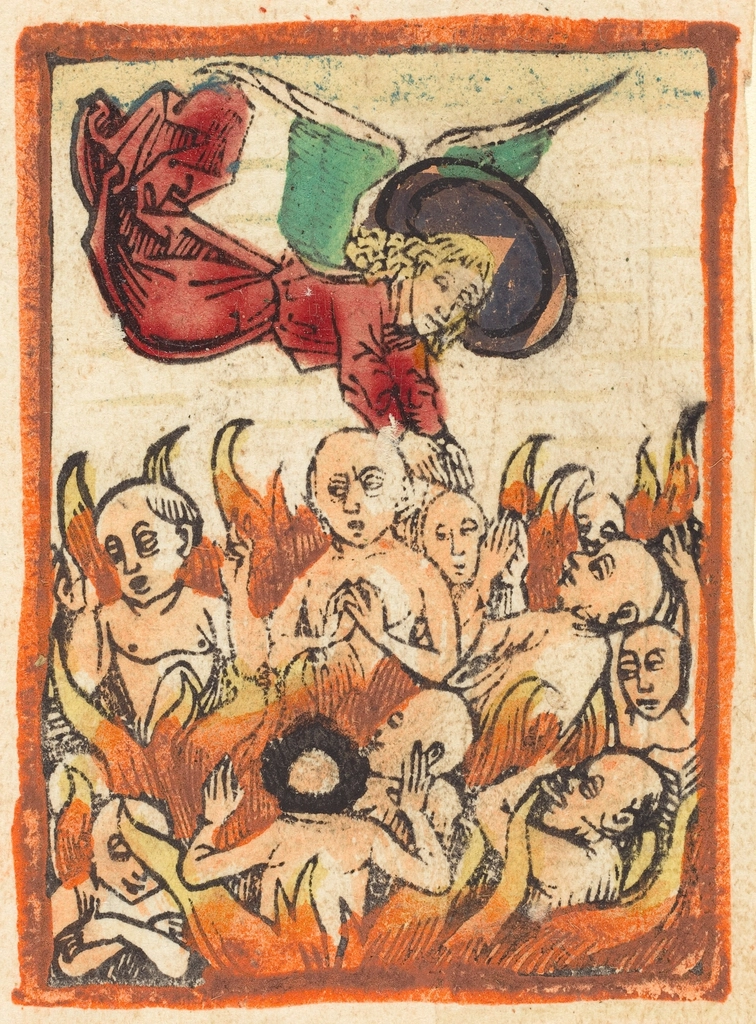
Apparently this topic did not come up in the New Testament in regards to the Pharisees’ views about the reward or punishment of the afterlife. Josephus mentions that he thought that they believed in reward and punishment for people in the afterlife based on what they did in life. However, the Bible, in contrast to this, makes condemnations of the Pharisees as subjects of God’s wrath. Matthew 23:13 and 15 condemn the Pharisees as sons of hell. Jesus pronounces a woe on them. This was a serious conflict apparently between this party and Jesus. He condemned them for that they did in making other men sons of Hell, even more than they were themselves.
- The Last Judgment
Matthew 3:7 records John the Baptist saying to the Pharisees and Sadducees, “who warned you to flee from the wrath to come?” He calls them a brood of vipers. The Pharisees were typically a subject of great ridicule by the Lord and His followers in the first century. However, Jesus did say to His disciples that they sit upon the seat of Moses and the disciples ought to do what they tell them to, but they should not do what the Pharisees do because they tie heavy burdens (that Moses did not intend apparently) on people (Matt. 23:1-12). So, if anything, the Pharisees were the subject of God’s future judgment as well as eternal Hell. Therefore, it could be pointed out that the Pharisees’ subjects of interest were turned against them. They in fact were the subjects of final punishment and wrath.
So Was Jesus a Pharisee?
There are in fact persons today who assert that Jesus was a Pharisee. It is true that Jesus and the Pharisees did find common ground on some common themes to whatever degree, even if Jesus did flatly turn it against them as shown previously. In addition to this, the Pharisees did at least engage with Jesus far more than the Sadducees, or Zealots, or Essenes. They might have been condemned in the strongest possible terms by Jesus, the Messiah, but they were at least talking with Him. Some have concluded that because of certain commonalities that Jesus was for all intents and purposes, one of them.
The book, Jesus the Pharisee by Harvey Falk, seeks to address this issue from a Jewish perspective. The point of the book is to suggest that Jesus and his followers never sought to abolish the Jewish faith but rather to use strong language to criticize the religious leaders of the Jews in order to appeal to these same sentiments in the neighboring Gentiles and seek to win their favor. Jesus is said to have built a new religious system based upon the Noahide commandments which is broad enough to include the Gentiles and win them over from idolatry, but not to eliminate the Jewish religion.
His basis for this, in his own Jewish religion, is to refer to a letter written by Talmudist Rabbi Jacob Emden that says that the Noahide commandments were transmitted to Moses at Mt. Sinai and that commonality could be reached with the Christians on this basis asserting all of the aforementioned. Falk supposes in his book that Jesus and Paul could have been well acquainted with the Essenes, whose works, according to Falk, bear striking similarity to the New Testament books. He further suggests that if it is true that Noah was commanded to spread his covenant to the entire earth according to the Talmud, then what if the Essenes had this goal as well and it was simply true that Jesus and Paul succeeded in this same goal where the rest of the Essenes had before failed?
The author further records that he discovered that Menahem, the Essene had taken about one-hundred and sixty other Essenes and gone on a mission to the Gentiles in 20 BC. He cites this as evidence. The author goes on to show that Hillel and Shammai had divided over the issue of the question of whether Jews could accept Gentile converts into the community. The author believes that Shammai’s followers were in control of Jewry of Jesus’ day, and the debates between Jesus and the religious leaders were really debates between Hillel and Shammai recorded in the Talmud.
There is not enough room in this paper to address all of the passages that he used to support this, but I want to take up one which is somewhat rich with theological reference to the Old Testament, but also based on a discussion between Jesus and a religious leader, namely Nicodemus in John 3.
The text indicates that Nicodemus was a “ruler of the Jews.” He was a member of the Sanhedrin or of the seventy Pharisees who ruled the religion of the Jews. The beginning of this passage is juxtaposed to the previous passage indicating that even though many “believed” in Jesus, He did not commit Himself to them because He knew what was in them (John 2:23-25). This indicates that there can be a false belief or a false faith that Jesus does not reward with His acceptance.
Likewise, this following dialogue seems to indicate a “case in point,” that being a ruler of the Sanhedrin named Nicodemus who came to Jesus by night, possibly out of fear of being found out. He initiates the conversation saying that He knew that Jesus was from God because of the signs which He worked. Jesus cut to the chase, seeming to go beyond what Nicodemus just said. Jesus starts talking about being born again as the criteria for entering the kingdom of God.
The question follows naturally of what the Lord is talking about here. Some have indicated that Nicodemus knew what Jesus was talking about, but he was simply following the analogy by asking how. He believed this rebirth to be impossible both physically and spiritually. Most people indicate that Nicodemus was genuinely confused by Jesus’ statement. Whichever case a person takes, the response by Nicodemus indicates the bottom-line issue that all people face. There is always a puzzling response to the question of how a person can possibly begin their lives again or start anew, whether Nicodemus picked up on Jesus’ illustration or not.
The Lord reiterates Himself with some additional clarification. He says that one must be born of water and the spirit. Now this certainly should have rung a bell in the mind of a devout Pharisee if in fact the aforementioned would not have. Ezekiel 36:25-26 uses the words water and spirit in the context of giving Israel a new heart. This is an Old Testament elaboration on the New Covenant. This indicates the kingdom message of the Messiah and necessitated what Jesus further indicates.
He says “that which is born of flesh is flesh and that which is born of spirit is spirit…The wind blows where it wishes, and you hear its sound, but you do not know where it comes from or where it goes (3:6-8).” In other words, the transformation necessary for a person to enter the kingdom of Heaven comes from the Spirit, and no one knows where He is going, or when He is going, just as the wind blows wherever or however it wishes. Jesus even indicates, “Are you the teacher of Israel and do not know these things?”
Jesus’ following words are succinct. He indicates among other things that just as Moses lifted up the serpent in the wilderness to heal the children of Israel of their affliction in the desert, so must the Son of Man be lifted up so “that whoever believes in Him may have eternal life (John 3:15).” Following this is the ever-popular John 3:16, which does not indicate that the whole world is saved automatically because of what follows this. John 3:19-21 then adds that those who do wicked deeds hate the light and those who do good works wish to be seen “that his works have been carried out in God.” This shows that those who are of God are known by their works though they are saved by grace alone.
Add to this text in John 3, the concept that Jesus claimed Himself to be the Son of God, and here as well as elsewhere, the Son of Man, is stark. This would have been a clear claim to deity rooted in Old Testament passages, and you have a clear saving message offered first to the Jews directly, and later spread to the Gentiles through the Apostles after Jesus’ death and resurrection. This is clearly not, as Falk claims, a salvation offered exclusively to Gentiles who need to relate to Jews on the basis of the Noahide commandments rooted in the new teachings of Hillel against the popular teachings of Shammai in his day. Jesus was in fact making radical claims to Messiahship to the lost sheep of Israel fulfilling the New Covenant and all the covenants of the Old Testament.
Conclusion
The fact needs to be considered that the Jewish leaders of Jesus’ day were not following the heart of the commandments. The Pharisees had heaped up commandments and traditions that weighed men down and had gone away from loving the Lord and one’s neighbor as yourself. The law had devolved in their eyes into a large complex of minute rituals of cleanness. Jesus sought to offer true salvation to the Jews. Jesus’ multitude of claims to deity and offers of salvation to the religious elites of His day were not intended to suggest anything related to religious debates and power struggles as to whether Gentiles should be included or not, but they were intended to bring to mind Jesus’ claim to Messiahship. It could be added that reference to the I AM statements of Jesus in John’s Gospel contribute to this. Many people in these passages accused Jesus of blaspheme and would have executed Him given the chance. Jesus was offering radical claims meant to redeem His people from their sins. He stood apart from the Pharisees and rooted His claims in the message of the Old Testament very often, and His references are too direct to be missed if a person is a student of the Bible.
Bibliography
Borchert, G.L. John 1-11. Nashville, TN: Broadman & Holman Publishers, 1996
Falk, Harvey. Jesus the Pharisee. Eugene, OR: Wipf and Stock Publishers, 1985
Ferguson, Everett. Backgrounds of Early Christianity. Grand Rapids, MI: Eerdmans Publishing, 2003
Maier, Paul L. ed. The Essential Works of Josephus. Grand Rapids, MI: Kregal Publications, 1994
Saldarini, Anthony, J. Pharisees, Scribes, and Sadducees in Palestinian Society. Grand Rapids, MI: Eerdman’s Publishing, 2001





Leave a Reply