Introduction
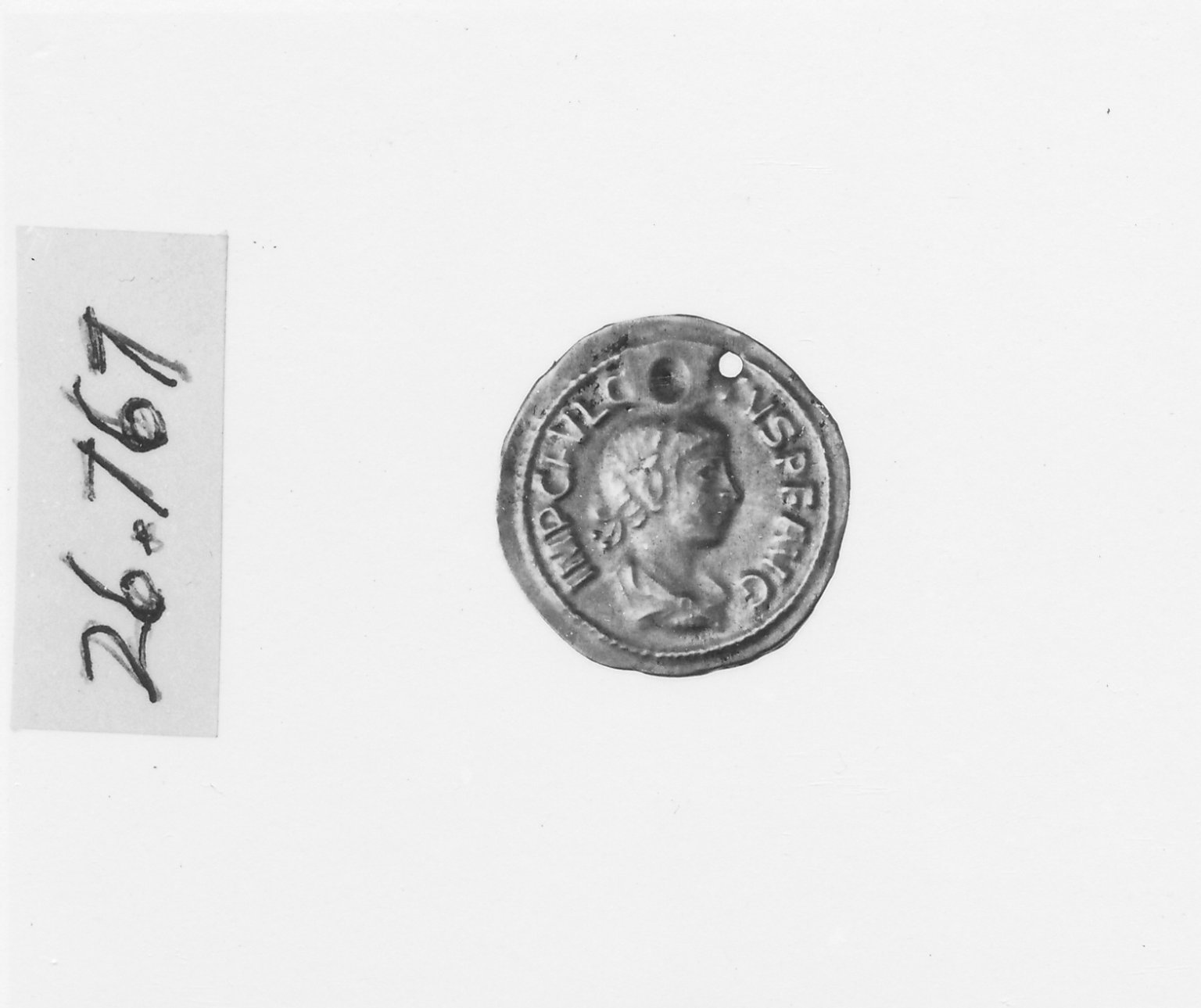
The Roman Empire extended all the way from the southern half of Britain and Spain in the West all the way to Syria and Judea in the East. It was a unified society, yet a diverse one since Rome was not out to abolish all national identity apart from its own. It did serve to bring peoples together in a cultural sense continuing the similar legacy of the Greek empire of Alexander the Great. However, the Caesars formed a more continuous line of direct leadership than had the dividedness of the Greek empire after the death of Alexander.
Roman Leadership
Caesar Augustus died in AD 14 leaving Tiberias to take over and reign from that point through the beginnings of the early church in Acts. The Pax Romana, which is Latin for “Roman Peace,” extended from the era of 27 BC through 180 AD. Though it is referred to in this way relative to other times of war and struggle in the empire, it was anything but totally peaceful. Tiberias troubled the Roman people. Tiberias also managed affairs from the island of Capri where he lay by the beach surrounded by naked small boys. He kept a pornographic image there where anyone could see the “position” that he wanted them to assume for him. He was the third of the Roman emperors and the first to indulge himself in this type of lifestyle. Meanwhile the Senate, though not expecting it, did have to manage affairs after his coronation in his absence. They tried to hold the empire together.
Tiberias also tortured and executed anyone he deemed any kind of a threat. When Jesus came on the scene, it is not surprising that when Pontius Pilate tried to pass the issue off onto Herod that he refused, not wanting to be connected with a particularly turbulent issue regarding a “Jewish King.” Pilate did not want anything to do with it either, but he passed it off as what the people demanded. After executing a group of rebelling Samaritans in AD 36, Pilate was removed from his position in disgrace and sent home by the Roman governor of Syria. In AD 37 Tiberias died of an illness.
Caligula, the son of Tiberias’ nephew, now took over as Pontifex Maximus and the leader of the armies. Some say that he had smothered Tiberias himself on his deathbed. Regardless, the empire passed to him. During his reign there were some struggles on the eastern border with Parthia. It is said in the “Gospel of Thomas” that Thomas, the apostle, made it as far as India where he converted a royal couple just married and convinced them not to cohabitate but to live for truth. Obviously, this is not plausible as an apostle of Jesus, but it could be that Thomas went east and could have converted some of the people of those eastern nations.
In AD 40, Caligula decreed that he was divine and demanded worship. The Jews objected to the setting up of his images throughout Judea, and the Roman commander sent a letter asking if it was really necessary to set up Caligula’s image in the midst of Judean beliefs and culture. Caligula had died, however. So, Patronius’ plea and Caligula’s response never came to fruition. Now, his uncle, Claudius had his sights set on the title of princeps, which he gained in just days after the death of Caligula. Then, later in AD 54, Nero became emperor at a very young age after Claudius was poisoned.
Nero was actually very virtuous in his early years, possibly the result of influence by his teacher. However, he became increasingly more insane, and in AD 64, he was blamed for a severe fire in Rome. Supposedly, people said that he started it to make room for his new palace. Whether or not this was true is another matter, but in order to dispel accusations, Nero blamed the Christians for it. While all this was in the background, the foreground of the early church was the immediate cultures in which it thrived.
Cultural Backgrounds
In Roman culture, it is not enough to talk about the Pax Romana and the succession of emperors in Rome without talking about the society at home. Rome formed the infrastructure that connected formerly separated nations into one empire. This led to the ease with which the Gospel could spread. However, women were generally undervalued. Not that the wife wasn’t seen as domestically in charge of the home, but women by and large were kept at a limit or were concubines who might have been sold into that life or taken off the streets having been forsaken as a baby by her parents because girls were generally unwanted. In this context, Paul’s command to love your wife in Ephesians 5 was incredibly counter-cultural.
A person could enumerate a number of cultural hindrances to Christianity. As seen in the case of Caligula, emperor worship was alive during the early church, if a person did not worship the emperor or the deities of the Greco-Roman pantheon, then that person would have been considered an atheist. The Christians’ “love-feasts” were condemned as sexual orgies. In addition, the worship of a crucified savior was completely outrageous at the time to both Jews and Gentiles. No one would have thought that if God had even visited earth, that He would be crucified on a cross as a criminal. Even the resurrection was unthinkable. Greek philosophy looked down on the body and either condemned feeding its appetites or encouraged it, but both were means of escape. No one would have believed that God would be incarnate in the first place and then resurrected after being crucified like a criminal so that we could all be forgiven and resurrected one day. However, in the overall quest for meaning and the skepticism in that age, the world was on a trajectory that prepared many of them for the acceptance of a holistic worldview that brought meaning and importance to life.
Some Key Locations in the Book of Acts
- Antioch (Acts 15)
In addition to this, Antioch was the third largest city in the Roman empire after Rome and Alexandria. It could have had a population, as some say, surpassing 500,000. It had been established by Seluecus I on the bank of the River Orontes. Several of the emperors of Rome had treated it with special attention. It had been originally a settlement of Macedonian soldiers, but now it was a thriving hub of a diverse array of people but with a decidedly Hellenized culture. It was here that Paul was sent forth to bring the Gospel to the Gentiles, and it was here that the Gentiles were first converted.
- Caesarea (Acts 24)
Paul later found himself here in defense of his life against the Jews who had attacked him in Jerusalem. This city was a hub of cultural advancements which opposed all Jewish sensitivities. The Jews did not inhabit the city till later on after it had been completed by Herod. It had in fact quickly become set as the location for the capital of Palistina by the Romans. It was completely modern with a secure harbor for ships as well as such amenities as clean drinking water, and a hippodrome, as well as a natural means of cleansing the city’s sewage twice daily into the ocean. It was a clean and modern city with the benefits of secular and cultural advancements of the time. It was everything forward-thinking whereas Jerusalem was everything traditional and Jewish.
Conclusion
The emperors, culture, and cites of Rome flourished during the times of the Apostles following the resurrection of Jesus in the midst of the Pax Romana. It was a time not without conflict and stress, but it brought about cultural stability and the infrastructure and common language and customs that laid the framework for the spread of the Gospel. The decidedly Roman surrounding couched in Greek culture in regards to the spread of a Jewish sect resulted in the foundation of the church’s spread to all the world.
Bibliography
Bauer, Susan Wise. The History of the Ancient World. New York, NY: W.W. Norton, 2007
Burge, Gary M. Lunn H. Cohick, and Gene L. Green. The New Testament in Antiquity. Grand Rapids, MI: Zondervan, 2009
Ferguson, Everett. Backgrounds of Early Christianity. Grand Rapids, MI: William B. Eerdman’s Publishing Co., 2003
Maier, Paul L. Josephus: The Essential Works. Grand Rapids, MI: Kregel Publications, 1994
Starr, Chester G. A History of the Ancient World. New York, NY: Oxford University Press, 1991
Walker, Peter. In the Steps of St. Paul. Wilkinson House: Oxford, UK, 2005






Leave a Reply