Introduction
The setting for the years following the death and resurrection of Jesus are turbulent and its religious and philosophical views are eclectic. Oftentimes, allegiance to Caesar is offered in a sense of worship, more or less depending on the emperor who presides, but outside of that, people are allowed to believe whatever they wish. However, a crucified savior is denigrated both in a popular sense and in an actual sense, but the message of the Apostles is that God had dealt with sin in this exact way in order to appease His own justice. This offensive message is the one that three key leaders of the early church will drive home to the various people and places to which they will minster.
James
James, the Lord’s brother, is mentioned in Acts 12:17 when Peter appears at the door after being imprisoned and tells them to send word to James and to the brothers, James is mentioned in Acts 15 when Paul and Barnabas appear before the council at Jerusalem, and then in Acts 21:18 he appears with Paul and the elders at Jerusalem to hear about Paul and his ministry. So altogether, he is not mentioned very much, but he is always described as being a person of central importance in Jerusalem among the saints there.
1 Corinthians 15:7 indicates that he was granted a special appearance of the resurrected Jesus, and Galatians 1:19 indicates that Paul saw Peter and “none of the other Apostles, except James.” In Historia Ecclesiastica 2.23, Eusebius describes the scene of the Judean people seeing that they had failed to execute Paul the Apostle, now turning on James, the brother of Jesus and stoning him to death. There are a few third century writings that were attributed to him, those being the apocryphal infancy gospel known as the “Book of James” as well as the gnostic “Apocryphal Epistle of James.” In actuality, he only authored the epistle of James in the New Testament, which highly focuses on righteousness in the life of the believer.
Peter
Peter is seen in the book of Acts as a bold proclaimer of the gospel in Acts 2, 3, and 4 especially as he is pictured preaching the gospel at Pentecost. He proclaims in 2:36 after quoting Ps. 110 that God has made this same Jesus both Lord and Christ. He is also a miracle worker in Acts 3:1-11, 9:32-35, and 38-42. In these passages, Peter heals a lame man at the gate beautiful. Peter also raises a godly woman named Tabitha from the dead in Acts 9. He is represented as an authoritative person within the early church as seen in Acts 1:15–26; 5:3–10; 8:14–17; 15:7–11. He is then the first individual to bring the gospel to the Gentiles in Acts 10:1–45. Therefore, when we see Paul rebuking Peter for succumbing to the urgings of the Judiazers in one of Paul’s earliest epistles, Galatians, it is another one of Peter’s many contradictions that comes as no surprise after reading the Gospels. No doubt, Peter repented of his separation from the gentiles per Paul’s rebuke of him “to his face.” However in Acts 10, Peter boldly goes to the home of Cornelius and baptizes his entire household. What the reader sees of Peter is boldness and leadership in the outreach of the gospel from the early church. It is of no surprise that God used men who had weaknesses, but Peter did in fact fulfill his calling by the Lord to be a “rock.”
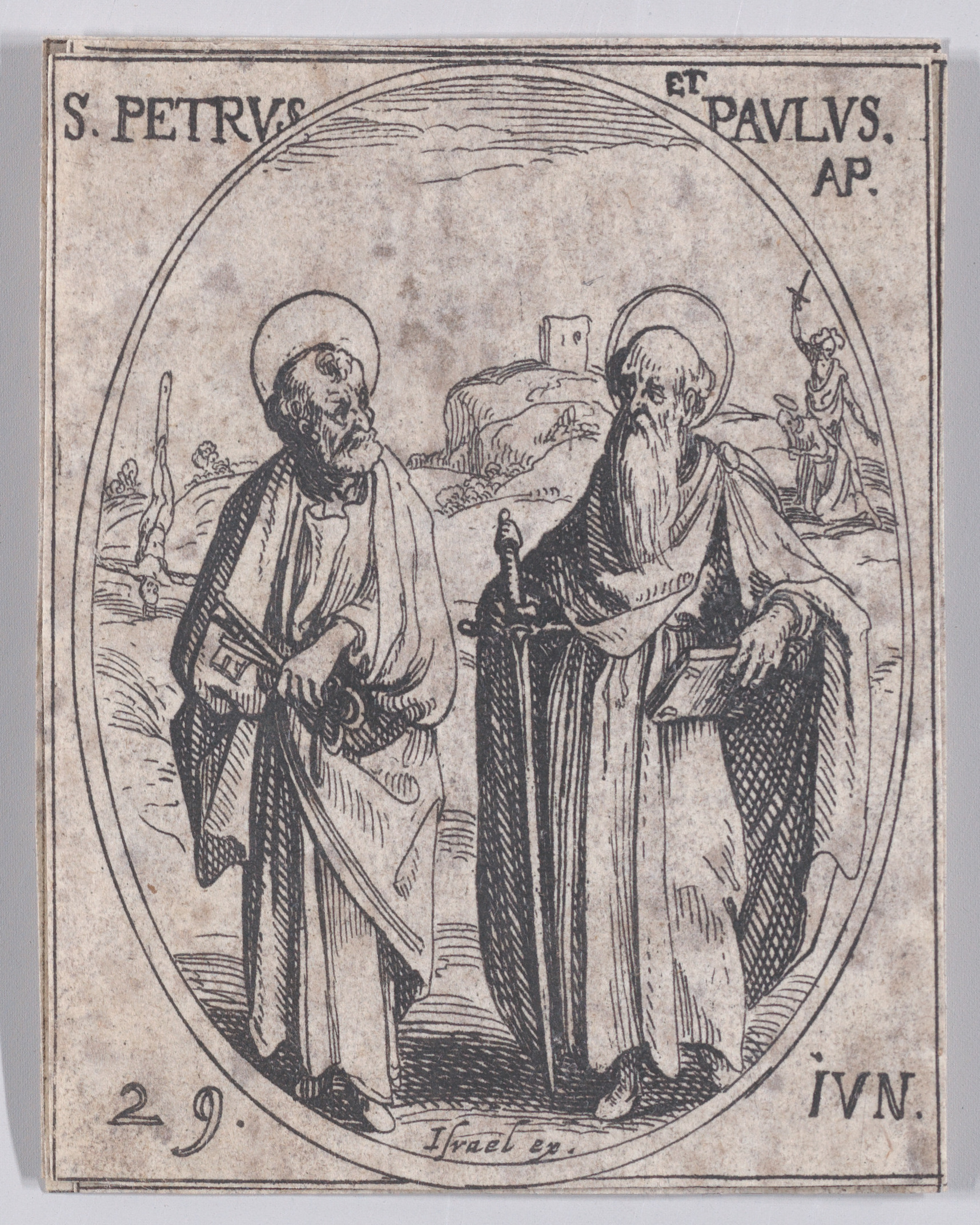
Peter is likewise represented as an early missionary to the Jews who lived outside of the city of Jerusalem (Acts 12:17). Ultimately, the Apostle Peter will demonstrate his whole-hearted devotion to Jesus by being executed outside of the city of Rome according to Clement. Tradition indicates that he was crucified upside down because he did not consider himself worthy to die upright as his Lord.
Paul
In Acts 8, Saul is described as a violent persecutor of the early church. After signing off on the execution of Stephen by stoning, he goes form house to house dragging out Christians and putting them in prison. While on his way to Samaria, Paul is struck down and blinded by a great light. Jesus asks Paul why he is persecuting Him? From that day forward, it seems like Paul is miles ahead of the typical first convert. After having his sight restored, he preaches. Paul then goes into the desert on what is presumed to be a time of preparation like the prophets of the Old Testament. He comes back on fire.
He stayed in Antioch teaching and preaching after Barnabas had found him and brought him there to help lead the fledgling group of mostly Gentile believers. This would become his “sending church” because he always came back to Antioch before being sent out to witness to unreached populations where he could build a foundation (Romans 15:20) and appoint leadership for the future development of each congregation.
In acts, the reader will see Paul go on three missionary journeys starting at Antioch. Each one encompasses a wider horizon before it ends at Rome. There is also the likelihood that Paul went on a fourth missionary journey to Spain if we read between the lines of a later imprisonment in 2 Timothy. This would come later after the events recorded at the end of Acts. Paul wrote in Philemon that he would return soon to Colossae, which he likely did before setting out to go to Spain as he had indicated at the end of the book of Romans. Later, he would be executed as a Roman citizen by beheading.
N.T. Wright points out that before Paul went to Rome in chains, while on his visit to Jerusalem to bring with him the gift for the Jewish believers from those Gentiles among whom were “Macedonia and Achaia” (Romans 15:26), Paul had often preached the value of giving to those in need as well as the unity in the body of Christ of both Jew and Gentile. They were all one. This was undoubtedly on Paul’s mind as he went along his way in his mission to the believers there where, as stated previously, he would meet first with James and the elders.
Conclusion
Each of these three individuals who feature prominently in the history of the early church are assisted and aided by other prominent persons, but they stand out as heads of ministry at different regions, people groups, or times. James focused on the church at Jerusalem sometime after his conversion most likely shortly after Jesus’ resurrection. Peter spearheaded the mission of the early church. He preached the bold sermon of Pentecost and led the early believers in their witness and spread of the Gospel. Perhaps surprising to many people, he was the first to reach out to the gentiles as seen in the case of Cornelius’ household. Paul was the first missionary to the gentiles focused mainly on spreading the gospel where that foundation had not been laid. Together, these three form a central focus of the literature of the book of Acts written by Luke, who was a companion of Paul.
Bibliography
Cross, F. L., & Livingstone, E. A. Eds. The Oxford dictionary of the Christian Church 3rd ed. rev. Oxford, UK: Oxford University Press, 2005
EarlyChristianWritings.Com. http://www.earlychristianwirtings.com/text/1clement-lightfoot.html Accessed on 25 June 2018
Ferguson, Everett. Backgrounds of Early Christianity. W.B. Eerdman’s Publishing Company: 2003
Gish, J. Peter the Apostle. In J. D. Barry, D. Bomar, D. R. Brown, R. Klippenstein, D. Mangum, C. Sinclair Wolcott, … W. Widder Eds., The Lexham Bible Dictionary. Bellingham, WA: Lexham Press, 2016.
Kirby, Peter. Trans. “Historical Jesus Theories.” Early Christian Writings.
McGiffert, Arthur Cushman, Trans. From “Nicene and Post-Nicene Fathers, Second Series,” Vol. 1. http://www.newadvent.org/fathers/250102.htm. Accessed 25 June 2018
Quarles, Charles L. Illustrated Life of Paul. B&H Publishing Group: Nashville, TN, 2014.
Wright, N.T. Paul: A Biography. Harper Collins: New York, NY, 2018.






Leave a Reply