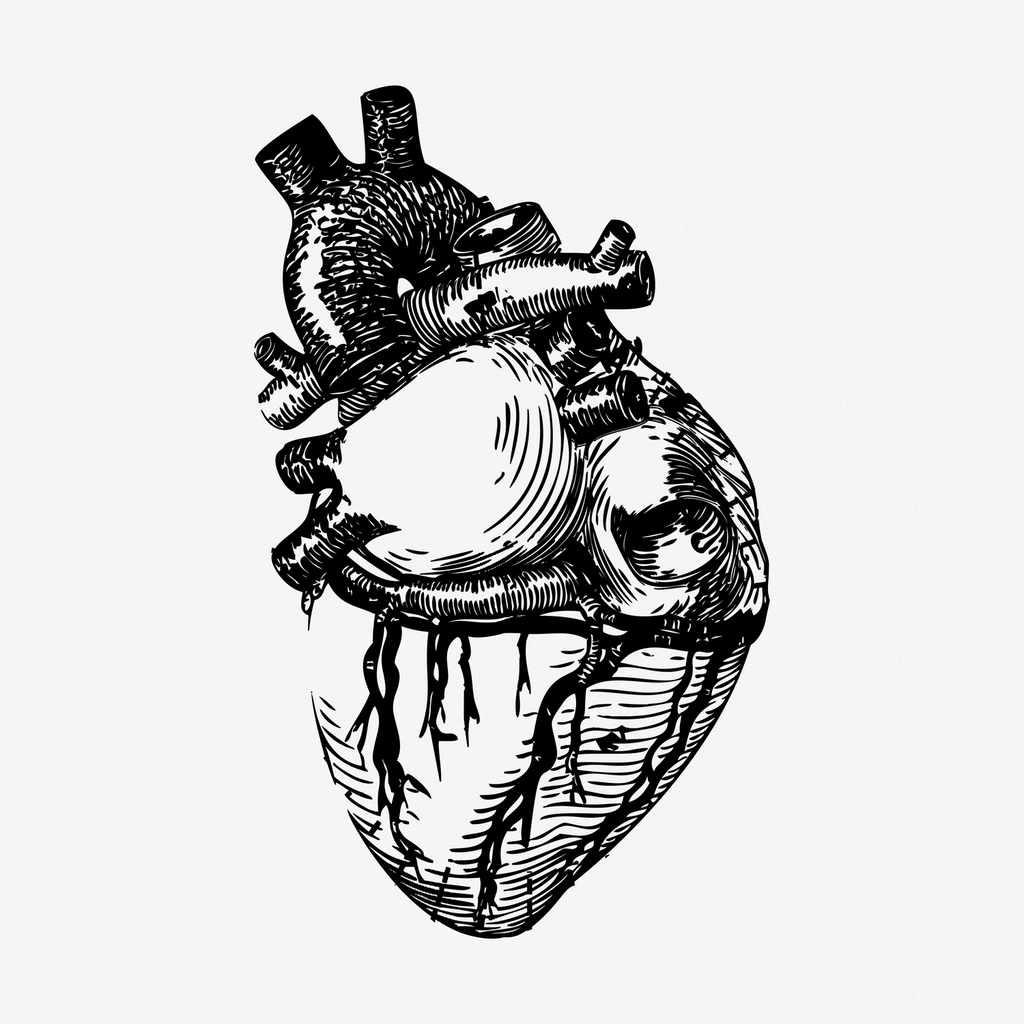
We have not only grammar, history and context to deal with in understanding the text, but we likewise have our own words, history, and context in coming to understand our own hearts as well.
One of the most insightful contributions of Dr. John Street’s book, “Passions of the Heart: Biblical Counsel for Stubborn Sexual Sins” (click here for the book on Amazon) is his definition of “biblical heart hermeneutics.” It is a spiritually difficult concept for a person to truly implement. Personally, I have come to appreciate deeply such valuable resources written by gifted biblical counselors on topics that need addressed. Dr. Street taught me so much in this book that I have to recommend it to anyone whether you think you struggle with sexual temptation or not, men and women alike.
But this concept is something that I want to camp out on for a moment, and to do so, I need to define hermeneutics. Dr. Thomas, in his book: “Evangelical Hermeneutics” says that hermeneutics is a science because it is based on specific rules. He defines hermeneutics as “the discipline that deals with the principles of biblical interpretation.” Michael Vlach defines the grammatical-historical method of hermeneutics as follows: “Belief that the meaning of a text can be determined by studying the grammar, history, and context associated with that text. This approach is often linked with the idea of ‘literal’ interpretation.”1
Here are some very fundamental rules in interpreting scripture from Dr. Wayne McDill of the Southern Baptist Theological Seminary:
1. Identify the kind of literature your text is for insight into its meaning.
2. Consider the context of the passage for a better understanding of its meaning.
3. Read the text for its plain and obvious meaning.
4. Try to discern the writer’s intentions when he wrote the text.
5. Look carefully at the language of the text for what it reveals about its meaning.
6. Notice the various theological themes in the text. 2
So basically, when you come to a specific text, you analyze it using these rules and you avoid reading into the text what is outside of the text, whether that is your own opinions or specific social concepts that come from the culture in which you live. We can debate how all that is done, but what Dr. John Street did for me as a concept is to turn this around and apply this depth of analysis to my own sinful heart. We have not only grammar, history and context to deal with in understanding the text, but we likewise have our own words, history, and context in coming to understand our own hearts as well. Dr. Street describes biblical heart hermeneutics with the following comments:
This type of interpretation can be extremely difficult. Consider, for example, that when a person studies the Bible, he has objective propositional statements with which to work, some easy and some more difficult, that require standard rules of grammar and syntax to aid in the proper understanding of its meaning. Even though the exegetical process may be tedious, depending on the difficulty of the terminology and genre, the interpreter is still working with an unchanging text. The Word of God is immutable. Working with the human heart, however, is quite a different thing. As we have already noted, the heart is cunning, calculating, and constantly changing. It is often actively deceiving and self-deceived, not inert. In other words, the heart will vigorously resist “exegesis.” Proper interpretations come only to those who are battle-wise in their application of biblical principles. Often a good counselor will find himself doing the job of interpretation in a war zone called the counseling session. The counselor not only fights the sinful tendencies of his own heart (e.g., frustration, impatience, anger, oversimplification, overidentification, excessive sympathy) but, in that interpretive moment, often faces considerable resistance from the counselee. An exegetical tug-of-war goes on between the analysis of fact and the determination of meaning. Just as “each of us reads the Bible in a foxhole surrounded by the fire of cosmic war between evil and the Spirit,” each of us reads our own hearts in the middle of a similar war.3
This being the case, there can be multiple sinful heart issues going on in a single problem. We tend to presume that maybe we are just a product of our environment and chemicals and neural pathways because that is the popular psychological concepts that we learn today. However, the fact is that you need to view your heart as an active and self-deceiving and actively deceiving spiritual part of yourself. Jeremiah 17:9 says, “The heart is deceitful above all things, and desperately sick; who can understand it?” (ESV) The prophet even asks the question, “who can understand it?” Add to that the unseen spiritual world that we cannot see but interact with daily, and we have, in each of us, a very complex and difficult battle for personal spiritual growth!
As a biblical type of case study, Dr. Street talks about the audience of Peter’s first epistle, the Roman Christians, who were under threat of persecution in Rome and under real persecution if they didn’t comply with such things as cultic prostitution:
Within this cauldron of trouble, the apostle Peter instructed the Christians by using the suffering of Jesus Christ as their encouragement. He admonished them to adopt the attitude of a soldier going to war: “Since therefore Christ suffered in the flesh, arm yourselves with the same way of thinking, for whoever has suffered in the flesh has ceased from sin” (1 Peter 4:1). The perfect tense of the term ceased (πέπαυται, perfect, middle, indicative) points to death. What is the worst that can happen to the Christian undergoing unjust suffering? The answer is death. Once death is realized, the struggle with lustful sin has once and for all ceased. The worst weapon of the enemy is death. Ironically, death is a weapon that actually helps the believer rid himself of lustful sin. Death is not to be dreaded, because it marks liberation from the body of sin with all its lustful weaknesses (Rom. 7:5, 18; 8:8; 1 Cor. 15:42, 49). However, Peter is not suggesting that Christians who are struggling with lustful sins should go out and get killed or even commit suicide to achieve their goal. How, then, does a Christian continue to deal with lustful passions in the context of a world that will do all it can to drag him into its depravity? If his goal is to be completely rid of lust, and he knows this will be achieved at death, then it stands to reason he will spend the rest of his days with the determined attitude of a soldier seeking to live according to God’s righteous standards. Peter says Christians facing the temptation of sexual sin, being fueled by fear of rejection and persecution, ought to live for the rest of the time in the flesh no longer for human passions but for the will of God. For the time that is past suffices for doing what the Gentiles want to do, living in sensuality, passions, drunkenness, orgies, drinking parties, and lawless idolatry. (1 Peter 4:2–3)
No longer living “in the flesh” parallels the idea of living “for the will of God.” The word “suffices” means “sufficient” (ρκετός). Far too much time has gone by for these Christians to give in to their fears and follow lustful pagan practices. The meanings of each of the words associated with these emperor-worship festivals are significant: Sensuality (σέλγεια) refers to unbridled and unrestrained living that usually involves sex. Passions (πιθυμία) is a general term for desires or passions, including sexual deeds in its somatic range. Drunkenness (ονοφλυγία) is used to refer to habitual drunkards. Orgies (κμος) are reveling through swaying and singing songs while drunk; drinking parties (πότος) are designed for the consumption of alcohol. Lawless idolatries (θέμιτος εδωλολατρία) are the lawless worship of idols. Fear of persecution, as well as the familiarity and comfort of their previous sinful practices as unbelievers, provided a temptation that was hard for these new Christians to resist. These well-intentioned believers were showing signs of returning to these drunken sex parties, which would be equivalent to accommodating idolatry. They would be surrendering not only to the worship of the emperor but to the worship of their own covetous desires.4
This is a cauldron of trouble that we today don’t have to face in the same way. Our problem is that the world bombards us with advertising and marketing and algorithms on social media that all drive sales and continues to feed you more of what you might have mentioned with someone in even an otherwise private conversation. Our problem on so many levels is access. We can easily access anything we want at the right price.
Our culture is driven to feed spiritual and physical hunger, so much so that it drives these lusts. You can’t go into a convenience store without music selections from industrial and organizational psychologists having a hand in promoting the types of music that solicit impulse buys. Even much of our diet is consumed with corn syrup and sodium and other chemicals that drive not just obesity, but more cravings, which are often just as based on our own desires for convenience as well. That’s just food though.
We live in an on-demand society. You can get a divorce online. You can buy a home online or a car as well. Be careful what your settings are on your Amazon account because your kids might accidentally, or on purpose, order something from Siri! And some of us can’t imagine the things that are available on the dark web! Dr. Street, while addressing specifically sexual lust, goes on to describe the types of themes to look out for when doing biblical heart hermeneutics for the sins of lust:
…you must recognize the presence of multiple gods of desire that may lead to both the conception and feeding of sexual sin (see fig. 8.1). These gods of desire in the heart are not always initially or directly connected to sex and the driving hunger of sexual hormones, but they do serve to underlie, support, and nourish their sexual expressions.
To properly identify and interpret the lustful tendencies of your depraved heart, you must realize that your heart is a fertile womb, capable of multiple conceptions. The lustful heart not only contains a variety of idolatrous desires but greedily manufactures more idolatrous desires. Covetousness is at the core of its prolific depravity, and as long as you live life in the flesh, your sinful heart will fabricate and refine these desires. The Mosaic law confronts this covetous nature of sexual sin not once, but twice. “You shall not covet your neighbor’s wife” (Ex. 20:17; Deut. 5:21). The apostle Paul attests to the reality that covetousness is involved with sexual lust when he warns the Ephesian Christians, “But sexual immorality and all impurity or covetousness must not even be named among you, as is proper among saints” (Eph. 5:3). To the Colossian church, Paul reinforces the concept of covetous sexual lust: “Put to death therefore what is earthly in you: sexual immorality, impurity, passion, evil desire, and covetousness, which is idolatry” (Col. 3:5).
The compounding problem of covetousness is this: a strong presumption of your own importance fills your covetous heart with demanding drives that seek sexual gratification. John Calvin exposes the covetous pride of the heart of man when he says, “But there is no one who does not cherish within himself some opinion of his own preeminence. Thus, each individual, by flattering himself, bears a kind of kingdom in his breast.” Calvin sees pride’s greedy expectations as the mother of everything in the heart that rebels against God; she will coddle and nurse all sexual sins until they have established a ruling kingdom there. Unholy sexual desires often set up a kingdom in the heart that becomes the domain of idolatry. Pride cultivates a sense of self-deserving expectation. It indulges the heart, which both hungers and hurts. As the heart hungers, it is prone to crave the praise of others (flattery), the possessiveness of others (control/power over), the prize of others (self-reward), and the pleasure of others (comfort).
The heart’s self-deserving disposition makes it prone to avenge hurt as well. Therefore, it will crave solace for its fury at others (anger), the failure of others (self-pity), its fright of others (fear), and its familiarity of others (discontentment). All these cravings have the potential to enslave a person to many different types of sins, especially the lustful sins of sex. Calvin indicates the starting point for a remedy: “For when the Scripture bids us leave off self-concern, it not only erases from our minds the yearning to possess, the desire for power, and the favor of men, but it also uproots ambition and all craving for human glory and other more secret plagues.” The beginning point for dealing with your heart’s ruling kingdom of lust does not involve Prozac or “power encounters” but rather the power of Scripture to overturn the reign of lust in your heart.5
One of the key resources in my life that has truly helped me on multiple levels is the concept of walking in grace (click here for my blogpost that I did on that concept also). It is so important that we both analyze our own heart and move closer to the fact that for one, we cannot please God no matter what we do, and second, the grace that God gives us in the face of that very guilt actually fuels our obedience by His Spirit out of our love for Him because He first loved us.
But biblical heart hermeneutics is the science of interpretation turned in on our hearts to give all our attention to exposing the sins and heart motivations that trip us up and cause frustration. Dr. Street’s book is about sexual lust, but it is a useful concept for that and so much more. If you struggle with any particular sin, there is a whole host of biblical counseling resources available for that fight. Here is a list of some of these resources by topic.
“For when the Scripture bids us leave off self-concern, it not only erases from our minds the yearning to possess, the desire for power, and the favor of men, but it also uproots ambition and all craving for human glory and other more secret plagues.”
John Calvin

- Michael J. Vlach, The Old in the New: Understanding How the New Testament Authors Quoted the Old Testament (Woodlands, TX; Sun Valley, CA: Kress Biblical Resources; Master’s Seminary Press, 2021), 306. ↩︎
- Wayne McDill. “Seven Principles of Biblical Interpretation.” Lifeway.Research.Com. Accessed June 24, 2024. https://research.lifeway.com/2014/03/12/7-principles-of-biblical-interpretation/ ↩︎
- John D. Street. “Passions of the Heart: Biblical Counsel for Stubborn Sexual Sins” P&R Publishing: Phillipsburg, NJ, 2019. p. 207 ↩︎
- Ibid. p. 209 ↩︎
- Ibid. p. 214 ↩︎






Leave a Reply